Everything you need
to market your
junk removal business
This is the course from the video, every strategy, every platform, every number, right here.
Most junk removal operators
will never figure out why
their phone goes quiet.
They do good work. They're reliable. They show up on time and they leave the place clean. And yet, some weeks the phone rings constantly, and other weeks it doesn't ring at all. They assume it's just how the business works.
It isn't.
The cost of one idle hour.
Every truck. Every day it sits.
Your truck is a $50,000 asset that charges you
whether it runs or not.
Insurance. Payment. Registration. Depreciation. These bills don't pause when the phone is slow. A truck sitting in your driveway on a Tuesday isn't just missing revenue, it's actively losing money. The math is brutal when you write it out.
Word of mouth has a ceiling. You already hit it.
Referrals are great, until you want to grow past them. You can't control the volume. You can't control the timing. You can't call up a satisfied customer and ask them to please refer three people this week. You're at the mercy of other people's schedules.
Your competitors are showing up first on Google. Every time.
Right now, someone in your city is searching "junk removal near me." They're going to call the first name they see. If that isn't you, it's someone else, and they're pocketing the $300 job that should have been yours. This is happening dozens of times a day.
You tried ads once. They didn't work. And that taught you the wrong lesson.
Most operators who ran ads and got nothing were running them wrong. Wrong keywords. Wrong targeting. Wrong landing page. No tracking. A bad setup isn't proof that ads don't work, it's proof that the setup was wrong. There's a significant difference.
Your marketing isn't an expense.
It's the engine. Stop feeding it
and the truck stops moving.
The operators doing $100k a month
aren't working harder than you.
They figured out one thing early: a predictable lead system is the only thing that separates a full truck from a parked one. They're not grinding harder, bidding lower, or driving further. They built a machine that runs while they're on jobs, and the phone rings because of it, not despite it.
The system exists. It's proven. And it works at every stage, whether you've never done a job, or you're already clearing $50k a month and want to double it.
But here's what that system actually requires, and why most people can't build it alone...This isn't theory.
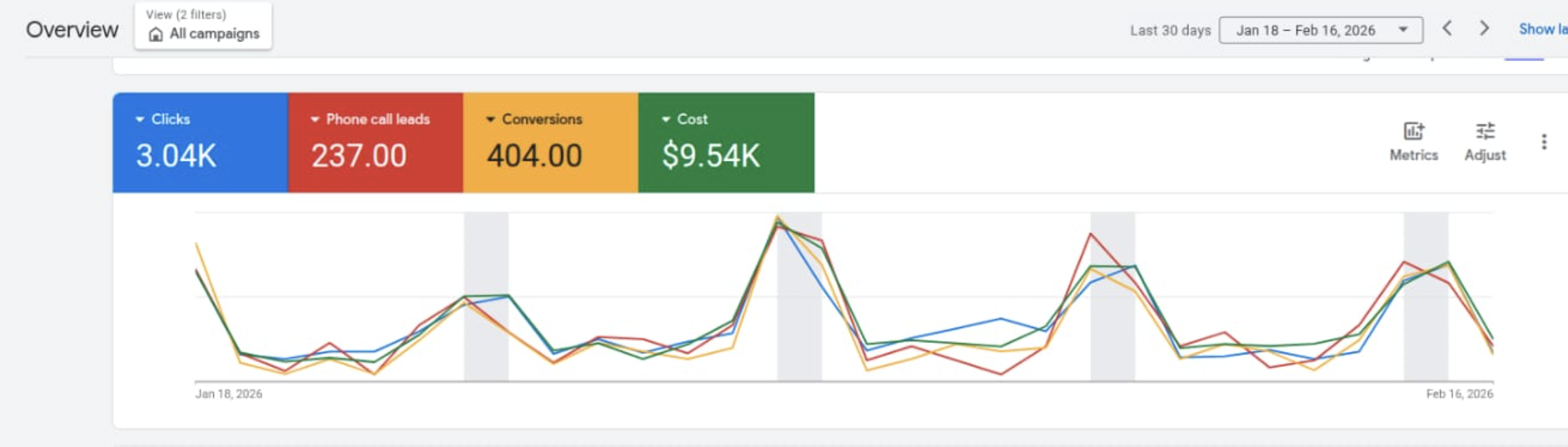
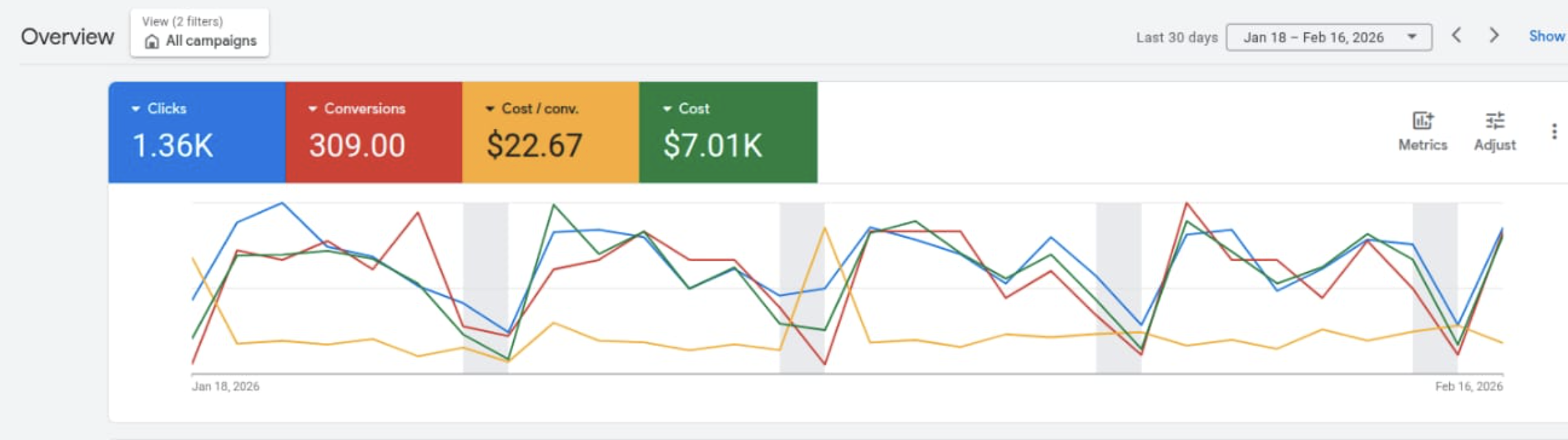
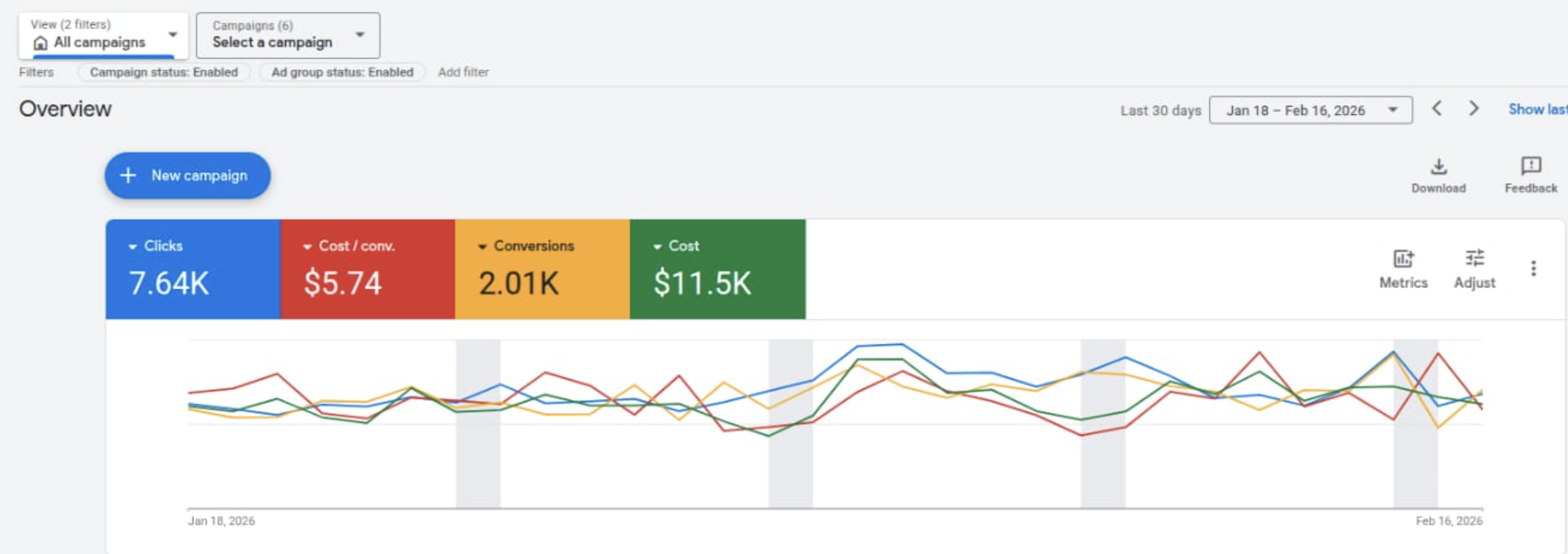
These are our clients.
Before we tell you how the system works, you need to know it does. These are actual operators in actual markets, some starting from nothing, some scaling past what they thought was possible.
Jan 18 – Feb 16, 2026
Jan 18 – Feb 16, 2026
Jan 18 – Feb 16, 2026
Getting results like that
requires a specific architecture.
Not just running ads.
Two platforms. Two roles. Both working together. One captures the customer who's already ready to hire. The other builds your name into the fabric of every neighborhood you operate in, so when the time comes, they call you without searching.
Most people try one. Fail at setup. Quit. And blame the platform.Everything you need
to build this yourself.
Every platform. Every keyword. Every ad type. Every follow-up sequence. Built for operators at any stage, from your first job to your fiftieth truck.
Google
Captures Demand
When someone types "junk removal near me" they have their credit card ready. Google puts you first. Every high-intent search in your city, your name appears before every result. This is the closest thing to a guaranteed customer you can buy.
- Search Ads, show at the top for every high-intent keyword
- Local Service Ads, the Google Guaranteed badge above all other results
- Pay per lead on LSA, pay per click on search, you only pay for engagement
- Specific service targeting: mattress removal, estate cleanouts, hot tub removal
- Full keyword architecture and negative keyword lists built for junk removal
Meta
Builds Your Brand
Think of a billboard on the highway into town. You don't know exactly who's going to call from it. But your name gets locked in. Meta is that billboard, but it follows your ideal customer everywhere they scroll. Every homeowner in your service area sees your truck, your work, your name. Every day.
- Target every homeowner by neighborhood, zip code, and life event
- Before-and-after video ads that stop the scroll and show real results
- Retargeting, follow every website visitor until they book
- Seasonal campaigns timed to spring cleanouts, moving season, year-end
- Lookalike audiences built from your actual customer list
- When they finally need junk removed, they call the name they recognize, yours
Course Overview
How this system works and how to use it
This system works at every stage. Whether you've never run an ad or you're doing $80k a month and can't figure out why your growth stalled, the architecture is the same. The difference is the budget and the sequence you follow.
We cover every platform, every channel, and every component. But we start with the foundation, because running ads to a broken setup is how you burn money and learn the wrong lesson.
Every module in this course maps to one part of that cycle. You'll know exactly what to do at each stage and in what order.
Mindset & Setup
Before You Spend $1
The stuff that kills ad campaigns before they start
Running ads to a bad setup is like pouring water into a bucket with holes. Before any ad budget gets touched, three things have to be in place.
1. A Phone You Actually Answer
Studies show the fastest responder wins the job over 70% of the time. If someone calls at 2pm and you call back at 6pm, they already hired someone else. This is the simplest and most impactful thing you can change today.
2. A Price You're Confident Quoting
3. Before and After Photos of Every Job
Your phone camera is good enough. These photos become your Google listing, your Meta ads, your proof of work, and your trust signal, all in one image. Start this habit before your first job.
Platform Overview
| Channel | First Lead | Cost | Lead Quality | Difficulty |
|---|---|---|---|---|
| Google LSA | 1–3 days | $20–60/lead | High | Easy |
| Google Search Ads | Same day | $15–50/lead | High | Medium |
| Meta Ads | 2–7 days | $20–80/lead | Medium | Medium |
| Google Business | 2–8 weeks | Free | High | Medium |
| Nextdoor | 1–2 weeks | Free–low | High | Easy |
| Craigslist | Same day | $5/post | Low | Easy |
| SEO | 3–6 months | Time only | High | Hard |
Your Offer & Why They Choose You
The one thing that makes everything else work better
In most cities there are 10 to 50 junk removal companies. Customers have no way to objectively compare them, so they default to whoever seems most trustworthy, responds fastest, and has the most reviews. That's the entire game.
You need one clear statement, one thing you're known for, that runs through every ad, every voicemail, every review response, and every text. Consistency is what makes a local brand.
| USP Type | Example | Best For |
|---|---|---|
| Speed | "Same-day removal in [City], call by noon, gone by 5" | Busy homeowners |
| Transparency | "We quote before we load. Always." | Price-sensitive customers |
| Local | "[Your name], local [City] resident serving neighbors" | Nextdoor, organic |
| Eco | "60% diverted from landfill, we donate first" | Environmentally conscious |
| Specialty | "Hoarding and estate cleanouts, we've seen it all" | Realtors, attorneys |
Your Website
Converts or It Doesn't
Every ad you run sends people somewhere. Make sure that somewhere works.
Your website has one job: convince someone in 10 seconds to call you. It doesn't need to be beautiful. It needs to be fast, mobile-first, and ruthlessly focused on getting a call or form submission.
What Every Junk Removal Website Needs
- Phone number visible immediately, big, tap-to-call on mobile
- Headline that names your city: "Same-Day Junk Removal in [City]"
- A simple form, Name, Phone, Brief description, nothing more
- Pricing section with load-based tiers, this alone increases conversion 30%
- Before and after photo gallery, real jobs, real results
- Google reviews embedded or quoted, minimum 5 before running ads
- Service area page listing every city and zip code you cover
Google Business Profile
, Use It Daily
The most important free thing you will ever set up
Your Google Business Profile is what shows when someone searches "junk removal near me." Phone number, hours, photos, reviews, map, all free. This is often the single highest-converting lead source for local operators, and it costs nothing.
Setup Sequence
- Claim or create at business.google.com, search your name first
- Primary category: "Junk Removal Service" or "Debris Removal Service"
- Secondary categories: Furniture Removal, Garbage Dump Service, Waste Management
- Set service area by city and zip, no physical address needed if home-based
- Add every service individually: Mattress Removal, Hot Tub Removal, Estate Cleanout
- Write a 750-character description including your city, services, and USP
- Upload at least 10 photos before running any ads to the profile
- Get 5 reviews before applying for LSA, use the text template below
Post Every Single Day
This is what most operators skip, and it is one of the strongest ranking signals Google uses. A stale, inactive profile tells Google your business might be closed. Daily posts tell Google you're active, relevant, and serving customers right now.
You don't need an essay. One photo and two sentences after every job is enough: "Just finished a full garage cleanout in [Neighborhood]. Same-day service available, call us for yours."
Google Search Ads
, The Fastest Leads
Same-day leads from people actively searching for you right now
When someone types "junk removal near me" they want to hire someone today. Google Search Ads put you at the top of that results page. You only pay when someone clicks.
High-Intent Keywords, Start Here
- "junk removal [city]" and "junk hauling [city]"
- "junk pickup near me" and "junk removal service near me"
- "same day junk removal" and "furniture removal [city]"
- "garage cleanout [city]" and "estate cleanout [city]"
- "mattress removal [city]" and "hot tub removal [city]"
Ad Copy Framework
Campaign Structure
Match Types, Use Phrase and Exact. Avoid Broad.
| Type | How It Works | Recommendation |
|---|---|---|
| Broad Match | Google decides based on theme | Avoid when starting |
| "Phrase Match" | Search must contain your phrase | Use this |
| [Exact Match] | Only your exact keyword | Use this |
Month 1 Optimization Checklist
- Check the Search Terms report weekly, add negatives constantly
- Turn off keywords with 0 clicks after 200 impressions
- Add call extensions, location extensions, and sitelink extensions
- Schedule ads to run during your actual business hours only
- Set location targeting precisely to your service area, not "nearby"
- Set up call conversion tracking in Google Ads before spending a dollar
Google Local Service Ads
, Pay Per Lead
The Google Guaranteed badge. The top position. The fastest trust signal.
LSAs are different from search ads. Instead of paying per click, you pay per lead, per actual phone call from a real customer. They appear above every other result, including regular search ads, and they carry a "Google Guaranteed" verification badge that dramatically increases click rate and conversion.
What You Need to Get Approved
- Business license, typically $25–75 from city hall or online
- General liability insurance, minimum $1M coverage, roughly $500–1,200/year
- Background check on the business owner, standard, Google runs it automatically
- At least 5 Google reviews, set up your GBP and collect reviews first
Ranking Factors for LSA
- Answer every LSA call within the first ring, missed calls lower your rank immediately
- Respond to messages within minutes, not hours
- Ask for a review after every single job, this directly affects your position
- Mark every lead as "booked" or "not a fit" in the LSA app consistently
Meta Ads
, Your Digital Billboard
Google captures. Meta builds. Both are required.
The fundamental difference: Google waits for people to raise their hand. Meta follows them before they do. On Facebook and Instagram, you're not waiting for someone to search, you're appearing in front of every homeowner in your service area, constantly, until your name is automatic.
Think about a billboard on the main road into town. You don't know when the exact moment someone will need junk removed. But your name is there, week after week, so when that moment comes, they call the name they know. That's Meta's job in this system.
Three Ad Types That Convert
Before and After Transformation, Show the cluttered space, then the empty space. Two photos or a short video. No narration needed. The visual does the work. This is the single highest-performing ad type for junk removal on Meta consistently.
Neighborhood Availability, Target specific zip codes with copy that feels local and personal. "We have openings in [Neighborhood] this week." Hyper-targeted. Low cost. High trust because it feels like a neighbor, not an ad.
Seasonal Urgency, Spring cleanouts, move-out season, year-end decluttering. Tie your offer to the moment customers are already thinking about junk. The timing does half the work.
Who to Target
| Audience | How | Why It Works |
|---|---|---|
| Local Homeowners | City radius, age 35–65, homeownership | Homeowners accumulate more and pay for removal |
| Life Events, Moving | "Recently moved" or "Likely to move" | Moving is the biggest junk removal trigger |
| Estate Interest | Estate sales, senior living interests | Connects to elder care transitions |
| Website Retargeting | Meta Pixel on your site | They already showed interest, remind them |
| Customer Lookalike | Upload your customer list, 1% lookalike | Meta finds more people like your best customers |
Nextdoor, Craigslist
& Referral Partners
Low-cost channels that fill gaps without a big budget
Nextdoor is a neighborhood social network. When someone asks "does anyone know a good junk removal company?" in your zip code, you want to be the name that comes up. Create a free business profile, get recommendations from customers in each neighborhood you serve, and your name spreads organically through the most trusted channel possible: neighbor to neighbor.
Craigslist still drives real volume in most markets. $5–7 per post. Repost every 48 hours to stay at the top. Keep it simple: services you offer, your city, your phone number, your USP. Budget $40–60/month and expect 3–5 extra leads per week from it consistently.
Realtors and property managers are the most underused referral source in the entire industry. One relationship with an active agent brings 2–4 recurring jobs per month. They need junk removal for pre-listing staging, foreclosure cleanouts, and estate transitions. Send a physical mailer. Drop off a card in person. Offer a referral credit. Show up once, most of your competitors never will.
Other High-Value Referral Partners
- Moving companies, they constantly encounter items customers don't want moved
- Storage facilities, abandoned units need clearing on a regular basis
- Estate sale companies, items that don't sell need to be hauled
- Senior move managers, elderly clients downsizing always have removal needs
- Home organizers, professional organizers create junk that needs to go somewhere
SEO, Free Leads
That Compound Forever
Takes 3–6 months to kick in. Pays indefinitely after that.
SEO means showing up in Google's organic results, the free listings below the ads. For local junk removal, this means ranking for "[service] [city]" searches in your market. Once you rank, the lead cost is zero. Forever.
The Three Pillars
On-page SEO: Your homepage title should be "Junk Removal [City], [Company Name], Same Day Service." Each service gets its own page. Each page includes your city name and the specific service. The more granular, the better, "hot tub removal [city]" is a real search term with real intent and very little competition.
Google Business Profile SEO: Review count and star rating are the dominant ranking factors. Posting activity, profile completeness, and NAP consistency across the web are secondary. This is why the GBP daily posting habit matters so much, it's both a ranking signal and a trust signal simultaneously.
Content: Write one page targeting each major question your customers search. "How much does junk removal cost in [City]?" alone can drive 10–20 organic calls per month once it ranks. "How to get rid of an old couch in [City]." "What can and can't be hauled by junk removal in [City]." Each page targets a keyword. Each keyword is a free inbound channel.
Follow-Up & Turning Leads
Into Booked Jobs
Where most operators leave 30–40% of their revenue on the table
Only 30–50% of inbound leads book on the first contact. The rest need follow-up, and most operators never do it. This is the easiest and cheapest way to increase revenue without spending more on ads.
The 4-Touch Follow-Up Sequence
Most of your competitors call once. Following up four times, professionally and without pressure, will close 20–30% of leads that would otherwise go cold. At $300 average job and 10 extra closings per month, that's $3,000 additional revenue from the same ad spend.
The Math of Scaling
Your Ad Budget
If the numbers work, you should be spending as much as possible
Operators get scared to scale ad spend because it feels like risk. The math removes the fear. If every $100 in ads reliably produces $350 in jobs, the only question is why you're not spending more.
Budget Milestones
| Monthly Spend | Est. Leads | Est. Jobs | Revenue Range |
|---|---|---|---|
| $500 | 12–20 | 6–12 | $1,800–3,600 |
| $1,500 | 35–55 | 17–30 | $5,100–9,000 |
| $3,000 | 70–110 | 35–60 | $10,500–18,000 |
| $5,000+ | 120–200 | 60–110 | $18,000–33,000 |
Your 90-Day Game Plan
Exactly what to do and when. No ambiguity.
Days 1–7, Foundation
- Get your business license ($25–75, city hall or online)
- Get general liability insurance, call 3 brokers for quotes
- Create and verify your Google Business Profile
- Set up a basic website with phone, services, pricing, and a contact form
- Create Facebook Business Page and Instagram account
- Post your first Craigslist ad
Days 8–14, First Leads
- Apply for Google Local Service Ads (takes 1–2 weeks to approve)
- Upload 10+ photos to your Google Business Profile
- Do first jobs (word of mouth / Craigslist) and take before-and-after photos
- Collect your first 3 Google reviews using the text template
- Begin daily posting to your Google Business Profile
Days 15–30, Paid Ads Launch
- Set up Google Ads account and launch first campaign at $20/day
- Add all negative keywords from the list above before going live
- Set up call conversion tracking in Google Ads
- Build a dedicated landing page for your Google Ads campaign
- Create Nextdoor Business Profile
- Sign up on Thumbtack, respond to every new request within 5 minutes
- If LSA is approved, activate at $200 starting budget
Days 31–60, Optimization and Meta
- Review Search Terms report, add negatives, pause underperformers
- Target 10+ Google reviews, request after every completed job
- Create first 3 Meta ad creatives: before-and-after, neighborhood, seasonal
- Launch Meta campaign at $15/day targeting local homeowners
- Set up Meta Lead Ad form for frictionless conversion
- Build your follow-up tracking, even a simple spreadsheet
- Reach out to 5 local real estate agents with your referral offer
Days 61–90, Scale What Works
- Calculate cost per lead and cost per booked job by channel
- Double budget on the best-performing channel
- Pause or reduce budget on underperformers
- Set up Jobber or HouseCall Pro if handling 15+ jobs/month
- Write 2 SEO blog posts targeting local search terms
- Set a Month 4 revenue target and calculate exactly what ad spend you need
The Accelerated Game Plan
For Established Operators
You have trucks, crews, and jobs. Now make the phone ring nonstop.
Module 12 is for operators starting from zero. This one is for you, the operator who already has a business, already has customers, and already knows the work. You don't need a business license. You need a system that fills every open slot on your schedule, starting this week.
Week 1, Audit & Fix Your Landing Page
- Run your website through Google PageSpeed Insights, if mobile score is under 70, fix it now
- Put your phone number at the very top, big, bold, tap-to-call on mobile
- Add a headline that names your city and your core promise: "Same-Day Junk Removal in [City]"
- Add pricing tiers (small/quarter/half/full load), this alone increases conversions 30%
- Add your best before-and-after photos and at least 5 Google reviews
- Remove anything that doesn't lead to a call or form submission, every distraction costs you leads
- Install Meta Pixel and Google conversion tracking before touching ads
Week 2, Launch High-Converting Ads Immediately
- Set up Google Search Ads targeting your top 5 high-intent keywords at $30–50/day
- Add every negative keyword from Module 05 before going live, this protects your budget from day one
- Activate Google LSA if not already running, set budget to $300–500/month
- Launch a Meta before-and-after ad campaign targeting homeowners in your service area at $20/day
- Set up a retargeting campaign on Meta, follow every website visitor for 14 days
- Enable call extensions, location extensions, and sitelinks on every Google campaign
Weeks 3–4, Optimize and Double Down
- Check Search Terms report daily for the first two weeks, add negatives aggressively
- Kill any ad group with zero conversions after $100 spend, reallocate to what's working
- A/B test two landing page versions, one with video, one without
- Review your follow-up process: are you calling back within 5 minutes? Texting same-day? Following up on Day 3?
- Upload your customer email list to Meta and create a 1% Lookalike audience
- Launch a second Meta campaign using the Lookalike, these are your highest-value cold prospects
- Ask for a Google review after every single job this month, target 10+ new reviews
Month 2, Scale What's Working, Cut What Isn't
- Calculate your cost per booked job by channel, Google Search, LSA, Meta separately
- Double the budget on your lowest cost-per-job channel
- Pause or reduce spend on any channel above your target cost-per-job
- Add seasonal ad copy, tie your offer to what's happening now (spring cleanouts, moving season, etc.)
- Expand your Google keyword list to include specialty services (estate cleanouts, hoarding, hot tub removal)
- Build relationships with 5 local realtors, send a physical mailer or drop off cards in person
- Post to Google Business Profile every single day, job photos with neighborhood context
Month 3, Full Throttle Growth
- Your ads should be generating 40–80+ leads per month at this point, if not, revisit landing page and targeting
- Hire ahead of demand, if you're turning away 15%+ of calls, add capacity before adding ad spend
- Launch neighborhood-specific Meta campaigns targeting zip codes where you close the most jobs
- Start testing video ads on Meta, 30-second job walkthrough or customer testimonial
- Set up automated review requests after every completed job (Jobber, HouseCall Pro, or manual text)
- Write 2 SEO pages targeting your highest-value local keywords for long-term free leads
- Set your Month 4 revenue goal, calculate exactly what ad budget gets you there using your real numbers
Now you know exactly
what the system is.
Will you build it?
Everything in this course works. The keywords, the platforms, the follow-up sequences, the scaling math, it's all real and it's all proven. The question isn't whether the system works.
The question is whether you have the time, the expertise, and the attention to build and maintain it while also running jobs, managing crews, and growing your business every single day.
You now know everything
you need to do.
Here's what that actually costs.
Not money. Time, focus, and mistakes. Building this system correctly, from LSA verification to Google Ads structure to Meta creative to daily GBP posting to retargeting setup, is a real job. Most operators who try it alone make the same four errors before they give up. And every one of those errors costs more than fixing them would have.
Setup takes 15–20 hours to do correctly, once.
And that's before a single dollar is spent. Keyword research, campaign architecture, negative keyword lists, landing pages, call tracking, conversion setup, done properly, this is a part-time job. Done poorly, it's a money drain with no bottom. Most operators start running ads within 2 hours and wonder why nothing works.
One wrong setting can drain your entire budget in days.
Broad match keywords with no negatives. The wrong location radius. Sending traffic to a slow homepage with no conversion goal. We see operators burn $800 in a week and get nothing, not because ads don't work, but because the setup was broken. The damage isn't just the wasted spend. It's the conclusion they draw from it.
Meta has a real learning curve. Most people burn $500–1,500 finding it.
The pixel setup. The audience architecture. The creative strategy. The retargeting windows. The budget scaling rules. Most operators run three ads, get no results, and conclude Meta doesn't work for junk removal. It does. But there's a specific way to build it.
This system needs constant attention, not a one-time build.
Ads get fatigued. Competitors adjust bids. Seasons shift demand. Google changes its algorithm. The system you build in March needs to look different in October. Managing this correctly is an ongoing discipline, not a weekend project. The operators who treat it like a one-time setup are the ones who call it expensive and ineffective.
We built this system.
We run it for you.
Every single day.
You run the jobs. You manage the crews. You build the business. We handle every piece of the advertising, setup, optimization, creative, reporting, so you never have to think about it. Your only job is to answer the phone.
Search Ads + LSA
Done For You
Full setup and ongoing management of your Google Search Ads and Local Service Ads. Keyword research, ad copy, landing pages, call tracking, bid optimization, handled weekly, every week.
- Google LSA setup, verification, and daily management
- Search campaigns, full keyword architecture, negative lists, match types
- Ad copywriting, 5+ variations written and tested
- Dedicated high-converting landing page built for your market
- Call tracking and conversion setup, every lead logged
- Weekly bid optimization and budget management
- Monthly reporting call in plain English
Facebook + Instagram
Done For You
Your brand running 24/7 in front of every homeowner in your service area. We build the creatives, target the right audiences, run retargeting, and optimize weekly. You build brand equity while we build the pipeline.
- Full campaign setup, Facebook and Instagram
- Before-and-after creative strategy, we guide what to shoot
- Hyper-local neighborhood targeting by zip code
- Lead form ads, customers book without leaving the app
- Full retargeting stack, website visitors, video viewers, page engagers
- Lookalike audiences built from your customer list
- Seasonal campaign rotations throughout the year
Infrastructure
Done Correctly
We make sure the engine has oil before we rev it. Your GBP, your website conversion, your tracking, all optimized before a dollar of ad spend goes out the door.
- Google Business Profile full audit and optimization
- Website conversion review and recommendations
- Call tracking installation across all channels
- Review generation system and follow-up templates
- Citation building across 40+ local directories
Full Transparency
Every Week
No black boxes. No "trust us it's working." You know exactly what your money is doing, every lead, every call, every dollar tracked and explained in plain language, every single week.
- Weekly performance dashboard, CPL, ROAS, jobs booked
- Cost per lead broken down by channel and campaign
- Call recording access, hear every lead that comes in
- Monthly strategy call with your dedicated account manager
- Full ad spend visibility, you see every dollar spent
We only work with
junk removal companies.
That's the entire point.
Not home services generally. Not "local businesses." Junk removal, specifically, exclusively. That means we're not learning your industry on your time or your budget. We walked in knowing your seasonality, your job types, your target customer, your margins, and what separates a $15-per-lead market from a $55-per-lead market.
Every keyword list in this course came from our actual client campaigns. Every ad template was tested with real money in real markets. The client results you saw, the real Google Ads dashboards, the real conversion numbers, the real cost-per-lead data, those came from this exact system, managed by us.
When you hand this to us, you're not getting a marketing agency that will figure it out. You're getting the people who already have.
Your trucks should be
running full.
Every day.
You have the knowledge now. You know what the system requires. You know what it produces. The only decision is whether you build it yourself, which is absolutely possible, and this course shows you exactly how, or whether you want it done correctly, immediately, by the people who built it.
We're here either way. But one path is faster. One path is certain. And one path lets you stay focused on the thing that actually makes you money, the jobs.